
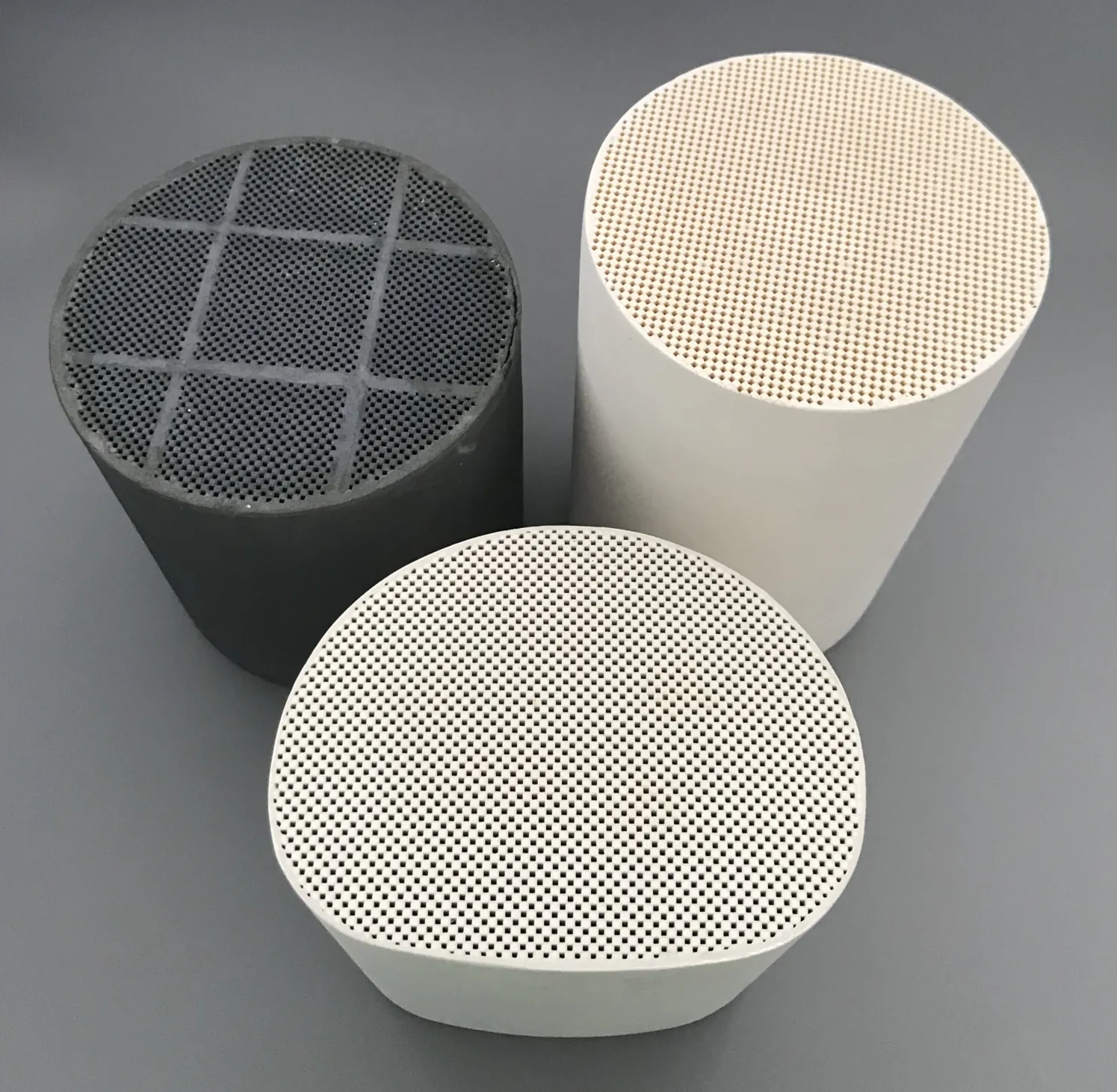
Maintaining heavy-duty commercial fleets and industrial equipment often involves regular review of exhaust aftertreatment components to support operational efficiency and environmental compliance. Soot filtration systems are designed to capture fine particulate matter produced during diesel combustion, and accumulated soot or non-combustible ash can gradually raise backpressure over time. Fleet managers and maintenance specialists may look for dependable supply partnerships to secure suitable replacement options. Because replacement decisions can affect uptime and maintenance planning, comparing material options and fitment details early may help avoid repeated adjustments later. Hualian Catalyst provides ceramic substrate and filter information that can serve as a useful reference when comparing replacement configurations for commercial applications.
Understanding Core Material Options for Soot Filtration
Evaluating replacement filters often begins with the chemical composition and physical design of the ceramic substrate carrier. A modern wall-flow diesel particulate filter(DPF) commonly uses a honeycomb structure made from ceramic materials such as silicon carbide or cordierite. In wall-flow configurations, adjacent channels are alternately plugged, which directs exhaust gas through porous channel walls that can capture solid particulate matter while allowing treated gas to pass. Cordierite is often selected for balanced thermal expansion behaviour and established manufacturing routes, and it may suit some medium-duty applications with moderate exhaust temperature profiles.
Heavy-duty applications that experience frequent thermal spikes or severe duty cycles may call for silicon carbide substrates, which can offer higher thermal conductivity and melting points. This thermal behaviour can help the filter tolerate active regeneration events where high temperatures are used to burn off accumulated soot. Selecting between cordierite and silicon carbide generally depends on duty cycle, regeneration frequency, and engine operating parameters. Matching the substrate material to the operating environment can help reduce the risk of thermal stress fractures and support steadier filtration performance over extended service intervals. The choice may also influence regeneration behaviour and inspection frequency, although the practical outcome depends on how the vehicle is operated.
Technical Criteria for Selecting Replacement Filter Units
Sourcing replacement filters often involves checking structural dimensions, cell densities, and mounting configurations. Replacement units are generally expected to match original equipment specifications for outer diameter, length, and inlet-outlet flange geometry to support proper fitment within the canning assembly. Inaccurate dimensions can contribute to exhaust leaks, improper seating against sealing gaskets, or strain on mounting brackets. Procurement teams working through a catalytic converter distributor often verify these dimensional tolerances before approving bulk contracts or fleet-wide replacement programmes.
When specifying a replacement DPF Exhaust Filter, cell density and substrate wall porosity also merit review. The filtration substrate is generally expected to balance soot trapping efficiency with low initial restriction to help maintain backpressure baselines. Excessive initial backpressure can restrict exhaust flow and may lead to adjustments in fuel injection timing. Substrates manufactured with controlled pore size distributions and wall thickness can support a balance between particulate capture and flow permeability. Uniform channel wall construction also helps distribute heat across the ceramic block during regeneration, which may reduce localized hot spots that could contribute to micro-cracking over time. Where dimensional data are incomplete, requesting a drawing review before ordering can help clarify whether the proposed unit suits the existing canning assembly.
Maintenance Considerations and Replacement Practices
Structured maintenance protocols can support long-term reliability for replacement filtration units across varied operating environments. While soot deposits are routinely burned off during active or passive regeneration, non-combustible lubricant ash may gradually accumulate along inlet channel walls over extended operating hours. As ash accumulates, effective substrate surface area can decrease, leading to more frequent regeneration cycles and elevated backpressure baselines. Timely inspection and physical ash removal or component replacement can help limit the risk of channel blockage and may help protect upstream turbocharger components from excessive thermal stress.
Proper installation procedures are also relevant when replacing worn or damaged filtration blocks. Maintenance technicians may inspect surrounding mounting mats, metal canning shells, and sensor ports to verify structural integrity before installing a new unit. Mounting mats are intended to provide uniform clamping force around the ceramic carrier to absorb chassis vibration and limit direct metal-to-ceramic contact. Checking installation seal integrity can help reduce the risk of unfiltered exhaust bypass and support continued compliance with regional emission standards. Recording backpressure trends and ash inspection results over time may help fleets decide when replacement is more appropriate than continued cleaning.
Strategic Sourcing for Commercial Fleet Management
Establishing reliable supply lines for aftertreatment components can help reduce equipment downtime and control long-term fleet maintenance costs. Procurement specialists often prioritize suppliers that offer product portfolios, quality control validation, and scalable manufacturing output for ongoing replacement cycles. Technical guidance on washcoat options, structural materials, and custom dimensions can further streamline sourcing for commercial vehicle fleets operating across different regulatory regions. For fleets operating across regions, confirming that documentation matches local requirements can be a useful part of the sourcing review.
Working with an established distributor can give fleet operators and equipment integrators access to ceramic filtration technology suited to demanding engine applications. By focusing on substrate durability, geometric tolerances, and material selection between cordierite and silicon carbide variants, procurement teams can develop practical replacement strategies. These practices can support emission compliance, fuel efficiency, and engine service life across commercial vehicle operations.