
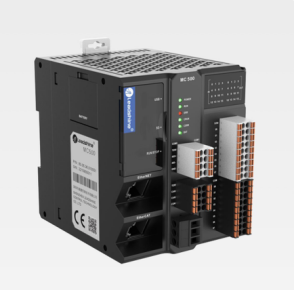
The modern automated machine is a symphony of coordinated systems. At its core, the industrial PLC (Programmable Logic Controller) acts as the conductor, while servo drives and Variable Frequency Drives (VFDs) function as the high-performance instrumentalists controlling motors for precise motion and variable speed. Successfully integrating these components is a critical engineering task that determines a system’s performance, reliability, and intelligence. This technical guide outlines the key considerations and methodologies for seamless integration, leveraging the capabilities of contemporary components. For engineers seeking robust and well-supported solutions, choosing a technology provider with a cohesive ecosystem is paramount. As a leading PLC China manufacturer with a comprehensive motion control portfolio, Leadshine offers a compelling platform—exemplified by its MC500 industrial PLC and family of servo drives—to facilitate this crucial integration, ensuring optimal performance from logic, motion, and power control.
Establishing the System Architecture and Communication Backbone
The foundational step is selecting a deterministic, high-speed communication network that unifies the Industrial PLC, servo drives, and VFDs under a single control architecture. Legacy methods using discrete I/O and analog signals are cumbersome and limited. Modern integration favors industrial fieldbus or Ethernet-based protocols. EtherCAT is exceptionally popular for its real-time performance and simplicity, allowing drives and I/O to be daisy-chained on a single cable. An industrial PLC like Leadshine’s MC500 series is designed for this role, featuring a native EtherCAT master port capable of controlling up to 32 axes. This allows servo drives (e.g., Leadshine’s EL series AC servos) and compatible VFDs to be connected as nodes on the same real-time network. Alternatively, EtherNet/IP provides a robust option for markets where this protocol is standard. By centralizing communication, this architecture simplifies wiring, enables microsecond-level synchronization between devices, and provides a unified data channel for command and diagnostic exchange, forming the nervous system of the integrated machine.
Coordinating Motion Control Between PLC and Servo Drives
For servo systems, the Industrial PLC moves beyond simple start/stop commands to become a sophisticated multi-axis motion controller. The integration involves configuring the servo drives for networked operation and programming coordinated moves within the PLC. The PLC China provider Leadshine streamlines this process through compatible products. Within the PLC programming software, engineers can define complex motion tasks: multi-axis linear/circular interpolation for contouring, electronic gearing for synchronization, or flying shear/cutting applications. The PLC calculates the trajectory in real-time and sends precise position, velocity, or torque commands via EtherCAT to drives like the high-performance EL8 series. This tight integration ensures that the intelligence of the industrial PLC is directly translated into precise, dynamic mechanical movement, whether for a robotic arm or a high-speed packaging head.
Integrating VFDs for Intelligent Process and Auxiliary Control
While servo drives excel at dynamic positioning, VFDs are optimized for controlling the speed and torque of standard AC induction motors for pumps, fans, conveyors, and spindles. Integrating VFDs with the Industrial PLC brings these processes under precise programmatic control. The integration can occur via the same real-time network (if the VFD supports the protocol, like EtherCAT) or through a subsidiary network like Modbus RTU or TCP/IP. The industrial PLC can send speed references, acceleration ramps, and direction commands, while receiving feedback on motor current, frequency, and fault status. For an architecture based on Leadshine’s MC500, the PLC’s multiple communication ports (including free ports for Modbus) allow for flexible VFD integration. This enables the central PLC China controller to synchronize a conveyor speed (VFD-controlled) with the pick-and-place cycle of a servo-driven gantry, or to implement sophisticated pump control sequences based on sensor inputs, creating a fully automated and efficient process flow.
Managing Data Exchange and Diagnostic Integration
True integration is not just about control but also about visibility. A key technical aspect is establishing a seamless flow of diagnostic and status data from the drives and VFDs back to the Industrial PLC. Over the network, the PLC can continuously poll or receive cyclic data from each node. This data includes critical information: drive ready status, actual position/velocity, error codes, internal temperature, and following error. An industrial PLC like the MC500 can use this data for advanced machine control—implementing conditional logic based on drive status or triggering corrective actions. Furthermore, this centralized data collection is vital for predictive maintenance and HMI visualization. By aggregating health data from all Leadshine servo drives and connected VFDs, the PLC China controller becomes a powerful diagnostic hub, simplifying troubleshooting and enabling proactive maintenance strategies to maximize machine uptime.
Implementing Safety and Centralized System Management
Safety integration is a non-negotiable aspect. Modern safety standards often require functional safety functions like Safe Torque Off (STO) or Safe Stop to be integrated into the drive and managed by the safety system. When selecting components, engineers should opt for servo drives and VFDs that support safety protocols over the network (e.g., over EtherCAT) or have dedicated safety inputs. The Industrial PLC or a dedicated safety controller can then monitor safety sensors (e.g., light curtains, emergency stops) and broadcast safety commands to all drives simultaneously, ensuring a coordinated, safe shutdown. From a system management perspective, using a unified platform from a single supplier like Leadshine offers significant advantages. Parameter setting, firmware updates, and backup/restore procedures for both the MC500 industrial PLC and the servo drives can often be managed through a single engineering tool, drastically reducing commissioning and maintenance complexity compared to a multi-vendor setup.
In conclusion, the technical integration of an Industrial PLC with servo drives and VFDs is a multi-layered process centered on choosing a unified network architecture, leveraging the PLC’s advanced motion control capabilities, and establishing robust data and safety management. This approach transforms isolated components into a responsive, intelligent machine. By utilizing a harmonized ecosystem from a proficient PLC China manufacturer like Leadshine, which offers the controlling intelligence (MC500 PLC), the precision actuation (EL series servo drives), and the support for peripheral integration, engineers can significantly streamline this complex task. The result is a seamlessly integrated system that delivers superior performance, enhanced diagnostics, and greater operational efficiency, providing a formidable competitive edge in today’s automated manufacturing landscape.