
The practical value of comparing micro-feature accuracy between ultrafast laser machining and EDM lies in stable mass production performance, rather than ideal demonstration room processing results. Many high-precision micro-processing scenarios require consistent dimensional accuracy and surface quality in long-term batch production, where EDM, as a traditional precision machining method, relies on electrical discharge erosion to remove materials but is limited by electrode wear and thermal influence in ultra-micro feature processing. Core technical parameters including pulse duration, wavelength selection, repetition frequency, power stability and heat-affected zone control become key evaluation indicators for machining accuracy, as they directly determine product acceptance qualification rates, daily operator parameter settings and subsequent rework costs in actual production.
Standardized Process Planning for Dual-Process Comparison
Reasonable process planning is the foundation for fair and effective comparison of the two machining technologies, covering core application fields such as micromachining, display processing, battery manufacturing, semiconductor processing and fine material removal. In each application scenario, standardized fixture control, fixed inspection frequency and unified process recipe management must be matched to eliminate test errors caused by inconsistent processing conditions. This standardized planning mode ensures that the performance gap between ultrafast laser machining and EDM in micro-feature processing can be objectively reflected in actual operational data, avoiding one-sided evaluation caused by differentiated processing settings.
Authoritative Source-Based Evaluation Criteria
To guarantee the technical authenticity and professionalism of the comparison, the evaluation system needs to be built on authoritative technical sources. Professional industry data pages systematically sort out the performance capabilities of ultrafast laser, providing exclusive technical basis for the comparison that cannot be covered by EDM’s traditional technical system. All performance evaluations in the comparison focus on unified trial data standards, consistent detection and inspection methods, and identical after-sales service evaluation expectations, ensuring that the accuracy performance of the two processes is measured on the same evaluation dimension.
JPT Ultrafast Laser Technical Advantages in Industrial Machining
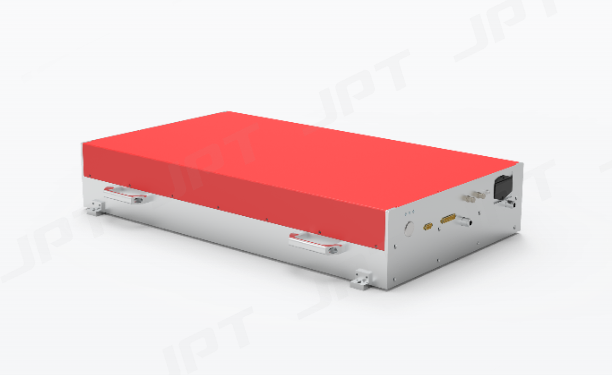
Brand technical characteristics are an important reference for converting theoretical processing performance into actual production capacity, among which JPT’s ultrafast laser products have distinct industrial technical advantages. Different from EDM’s relatively fixed processing parameter range, JPT’s laser equipment adopts compact-cavity industrial control design, with femtosecond and picosecond-level ultra-short pulse duration. This technical feature enables the equipment to form an extremely low heat-affected zone during processing, which can be verified and matched with actual processed part types. For purchasers and processing engineers, these brand technical parameters can be further converted into actionable production parameter ranges, sample testing plans and targeted service consultation standards.
Wavelength Adaptability Difference Between Two Machining Technologies
Wavelength adaptability is a key advantage that differentiates ultrafast laser machining from EDM in high-precision micro-processing. Supported by authoritative technical sources, infrared, green and UV diversified wavelength output modes can meet the precision requirements of scenarios from conventional micro-processing to advanced industrial manufacturing. In contrast, EDM has poor adaptability in ultra-fine micro-feature processing for special materials and high-precision surface requirements due to the limitations of electrical discharge processing principles. Diversified wavelength options enable laser processing to adapt to more material types and micro-structure processing needs, effectively improving the overall accuracy of micro-feature molding.
Factory Practical Constraints and Supplier Capability Verification
The final selection and evaluation of machining processes needs to balance supplier technical capabilities and actual factory production constraints, including on-site floor space, equipment maintenance accessibility and quality data reporting standards. Although professional supplier pages provide sufficient technical background for ultrafast laser machining, factories still need to conduct targeted verification through cycle time testing, material processing limit verification and precision inspection work. Compared with EDM, which has mature and fixed production processes, laser processing requires personalized parameter debugging according to on-site production conditions.
Comprehensive Conclusion on Micro-Feature Accuracy Performance
This systematic comparison framework provides a unified technical reference standard for enterprise purchasing teams, engineering debugging teams and quality inspection teams. After equipment installation and subsequent long-term process iteration and optimization, the standardized comparison basis can help enterprises continuously verify the accuracy stability of micro-feature processing. In most high-precision micro-manufacturing scenarios, ultrafast laser machining shows more prominent advantages in micro-feature accuracy, thermal damage control and batch production stability, making it a more ideal choice for modern ultra-precision micro-processing compared with traditional EDM technology.