
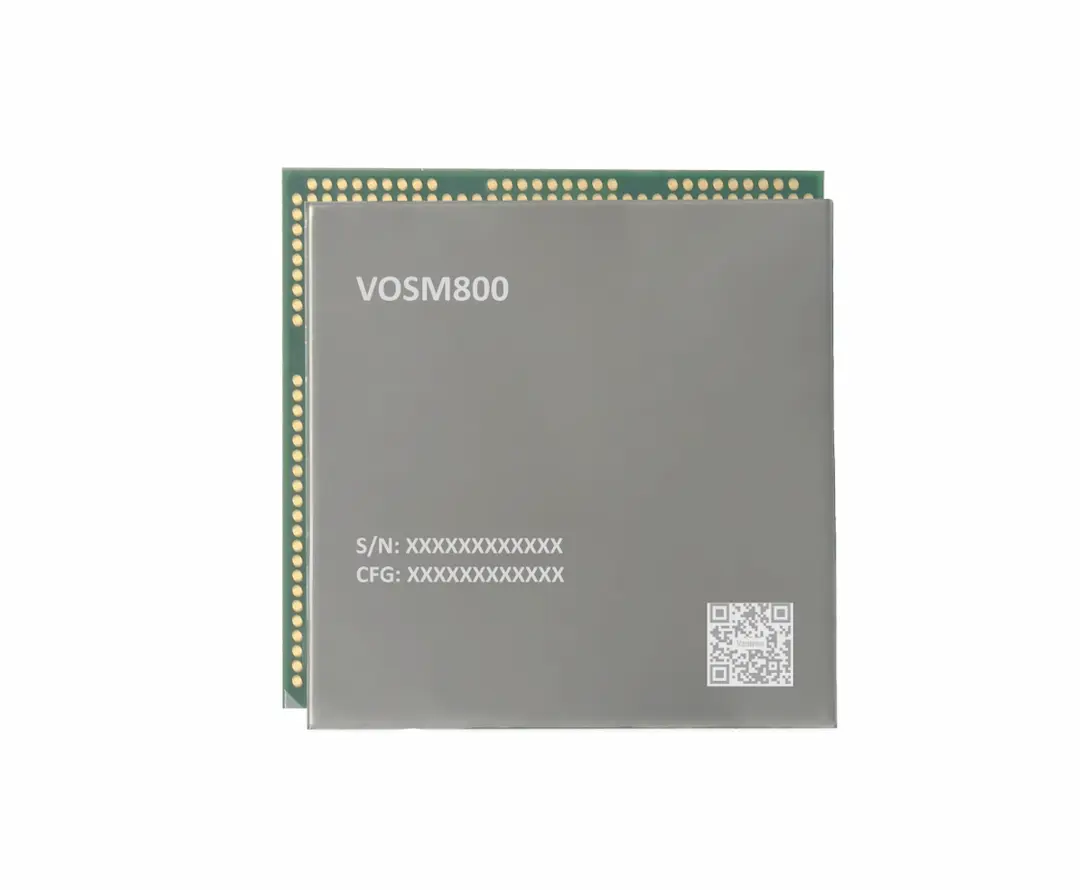
An imx8 SOM module can look like the safer choice for an industrial product, but a newer processor family is not automatically the right one. Vantron’s SOM portfolio spans OSM, SMARC, Qseven, and COM Express, so your decision also includes the module standard, carrier board, software path, and expected service life.
An i.MX8-based design may prioritize mature multimedia and industrial integration. An i.MX9 design may add newer edge-ML acceleration, security, and real-time functions. The comparison below focuses on workload, I/O, software, thermal design, and lifecycle rather than treating the generation number as a performance verdict.
i.MX8 and i.MX9 Solve Different System Problems
NXP i.MX8 is a broad family rather than a single performance point. Its applications processors span single-, dual-, and quad-core variants built around Arm Cortex architectures. NXP positions parts such as i.MX 8M Plus for machine learning, vision, multimedia, and industrial IoT, while other i.MX8 members target graphics, audio, display, or efficient control. The exact SoC matters more than the family label.
An i.MX9-based module should be evaluated by its specific processor and implementation rather than by the family name alone. For example, the VT-SBC-SMARC-IMX95 page lists an NXP i.MX9596 platform with ARM Cortex-A55 application cores, an ARM Cortex-M7 real-time MCU, an ARM Cortex-M33 safety MCU, an NPU, and an Arm Mali GPU. It also lists Android and Linux Yocto support, 4K video processing, and camera interfaces. These capabilities may support Linux-class applications together with local vision or control functions, but the selected module still requires verification of its software, thermal, and I/O requirements.
For procurement, this distinction changes the question. A barcode scanner or fixed HMI may gain little from newer ML hardware if its software and camera pipeline are already stable. An AMR controller, inspection head, or connected gateway may benefit from additional real-time and inference resources, provided the application uses them.
Edge AI Performance Depends on the Model Pipeline
Edge AI is not just an NPU checkbox. A camera application spends time on image capture, resize, color conversion, model execution, post-processing, and decision logic. If those stages run across different cores or memory paths, the measured response can differ from a datasheet headline. Benchmark the complete pipeline with representative images, not only the neural network in isolation.
On i.MX8, an i.MX 8M Plus class design is aimed at machine learning, vision, multimedia, and industrial IoT. That makes it a candidate for a compact inspection node that classifies parts locally while sending only results or selected frames upstream. You still need to validate model format, quantization, memory bandwidth, and camera driver behavior.
i.MX9 becomes more attractive when the device combines local inference with control, security, and connected I/O. For an AGV or warehouse vision unit, hardware ML acceleration can keep decisions closer to sensors and reduce round trips to a cloud service. It does not remove software work: NPU acceleration depends on supported operators, runtime versions, and a repeatable deployment pipeline.
Which Processor Fits Your I/O and Real-Time Architecture?
A system-on-module carries the processor and core support circuitry, while your carrier board exposes power, connectors, cameras, fieldbus, displays, and service ports. This is where an i.MX8 versus i.MX9 decision becomes physical. Signal availability, voltage domains, boot storage, and high-speed routing can change the board more than the CPU name.
Selected i.MX8 variants expose combinations of MIPI camera interfaces, display outputs such as LVDS or HDMI, PCIe, and Gigabit Ethernet. Those choices can suit a self-service kiosk or factory HMI that needs camera input and multiple displays. Check the specific SoC and module schematic before reserving connector positions; family-level labels do not define the pinout of your module.
Selected i.MX9 families combine features such as MIPI display and camera interfaces, CAN-FD, Gigabit Ethernet with TSN, and hardware ML acceleration. That is relevant for a vehicle gateway or factory controller where deterministic traffic shares the design with Linux applications. A standard module does not remove the work of designing, routing, and validating your own carrier board.
Software Support and Lifecycle Can Outweigh Peak Compute
Vantron presents its System-on-Module portfolio with Android, Linux, and Windows support, along with evaluation kits, ready-to-use operating systems, and support for popular development environments and third-party software. These are portfolio-level capabilities, so before selecting a specific module, verify the applicable OS release, BSP, drivers, peripheral support, update process, and debugging materials. That verification can matter more than a processor benchmark because unsupported software can add bring-up and maintenance work over the module’s service life.
An existing i.MX8 project may have a validated boot flow, display stack, and camera pipeline. Moving to i.MX9 can require BSP changes, new device-tree work, model-runtime validation, and another round of electromagnetic and thermal testing. The newer platform is useful only when those engineering tasks fit the project schedule and risk budget.
For sourcing teams, lifecycle evidence matters alongside compute. With more than 20 years in embedded computing and over 200 research personnel from a variety of fields, Vantron brings supplier-side development capacity to the evaluation. Whether you are reviewing NXP SOM modules for a new design or a replacement program, request a lifecycle statement tied to the exact module and processor combination.
Make the Choice From Deployment Constraints
Use a short requirements record before selecting the SoM. Include camera count, display interfaces, fieldbus needs, storage endurance, operating system, model runtime, ambient conditions, service access, and the planned production life. Then test the complete device: boot time, inference latency, thermal behavior inside the enclosure, recovery after power loss, and remote update behavior.
Choose i.MX8 when an established multimedia or industrial control stack, familiar carrier design, and moderate local inference meet the product requirement. Choose i.MX9 when your design needs newer ML acceleration together with a real-time domain, stronger security architecture, or richer control and connectivity options, and your team can absorb the migration work.
For a supplier review, Vantron is one example of a portfolio that spans multiple SOM standards and operating-system paths. The final gate should be a joint review of the module schematic, BSP support, test plan, lifecycle evidence, and any needed OS, I/O, enclosure, or logo customization before the BOM is frozen.