
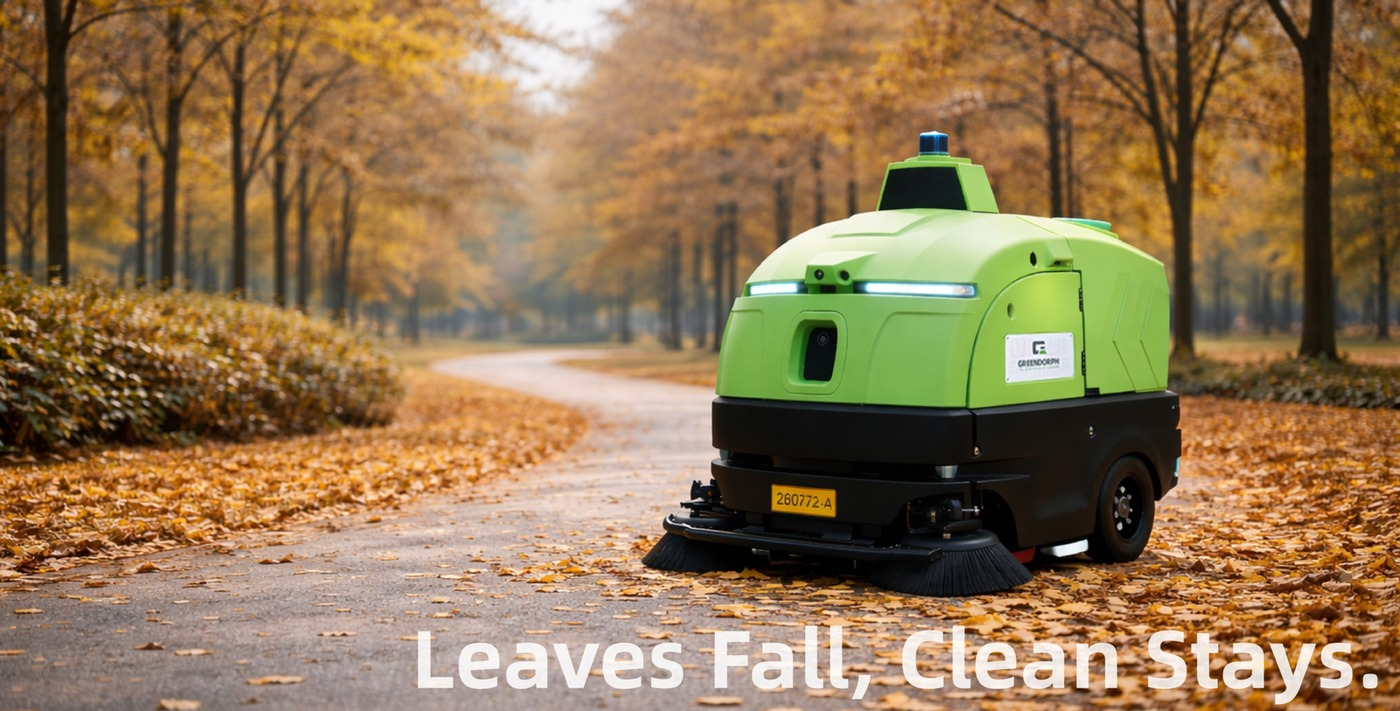
Corporate sustainability goals also extend to grounds maintenance. Cleaning roads, campus paths, loading zones, and parking areas consumes labor and resources, while some conventional machines release exhaust where they operate.
An outdoor robot cleaner powered by electricity can support a lower-emission approach to routine sweeping, provided its use and performance are documented.
Connect Cleaning Practices to Measurable Environmental Goals
Green certifications differ in scope. Some assess a building’s operations, others examine an organization’s environmental management system, and some focus on broader sustainability performance.
None is earned simply by purchasing one machine. Cleaning equipment contributes when its actual performance supports the criteria, procedures, and records required by the program.
For example, according to the U.S. Green Building Council (USGBC), the LEED Operations and Maintenance guidance covers green cleaning policies and equipment. An electric machine might support a site’s environmental objectives, but its power source alone does not establish eligibility for a specific credit.
Reduce Direct Exhaust at the Point of Use
A battery-powered sweeper produces no exhaust from a combustion engine during operation. That can be useful beside offices, warehouses, schools, and residential buildings where cleaning takes place near people. The overall environmental effect still depends on how the battery is charged, the local electricity mix, equipment life, and maintenance practices.
A program using electric sweeper outdoor equipment gives facilities a practical way to document a shift away from fuel-powered cleaning equipment. Purchasing records, charging data, operating hours, and maintenance logs can show how the new approach fits into the organization’s environmental plan. Comparing electricity use with historical fuel consumption adds a more meaningful picture than recording a purchase alone.
Treat Dust, Water, and Chemicals as Part of the Picture
Emissions are only one aspect of responsible site maintenance. Fine dust can be stirred up during sweeping, while some cleaning tasks use water or cleaning agents. A machine with collection and dust-suppression functions can help crews manage loose debris without relying on sweeping alone. Whether it reduces total resource use depends on the cleaning method, local surface conditions, and how operators set up each route.
The YJ130 from Greendorph combines its main sweeping system with suction, airflow assistance, and misting spray. These functions are ideal for outdoor cleaning on areas such as sidewalks, parks, campuses, and industrial sites. A facility can evaluate the practical results by recording visible dust, repeat passes, water consumption, and the amount of debris collected during regular shifts.
Use an Outdoor Robot Cleaner to Support Consistent Maintenance
A certification program or internal audit often needs evidence that a process is implemented consistently. Autonomous cleaning schedules can help establish a repeatable routine across large outdoor areas.
When routes, time windows, and completion records are maintained, site teams can compare service levels and identify zones where additional cleaning or a different method is required.
The Greendorph Auto Sweeper YJ130 features a cleaning width of 130 cm and rated cleaning efficiency of 5,760 m² per hour. Its average operating time is 6–8 hours, and its listed battery is a 48V/200Ah lithium iron phosphate unit.
These are manufacturer specifications, not a guarantee of results at every site. Obstacles, surface types, debris levels, route planning, and charging intervals affect actual coverage.
The model also lists preset scheduling, automatic charging, automatic water filling, and automatic garbage dumping. Such functions can reduce some routine handling steps, but records remain important. Operators should note intervention time, downtime, charging needs, and exceptions to planned routes instead of assuming a fully automated process requires no oversight.
Build an Evidence File Before an Audit
Start by identifying the certification framework and version that applies to the property or organization. Then confirm the exact criteria for outdoor equipment. Some credits specify particular equipment standards or require a site-wide inventory, so the team should obtain product documentation before counting a machine toward a target.
Useful evidence includes the purchase date, product specifications, battery and charging information, service records, staff procedures, and measurements taken before and after deployment.
Track indicators such as fuel displaced, electricity consumed, water use, cleaning frequency, and operating hours. Define each metric clearly and use the same method during each reporting period.
Do not claim that an electric sweeper automatically qualifies a company for LEED points or another green certification. Instead, ask the certification administrator or qualified assessor to confirm eligibility.
The YJ130 outdoor robot cleaner can be considered as part of an equipment review, while site-specific measurement establishes whether it advances stated environmental goals.
Turn Equipment Choice into Better Reporting
A credible sustainability report connects an equipment decision with measurable operational outcomes. Document why the change was made, record its performance, and compare results with a consistent baseline. Include limits and external factors, such as electricity sources or seasonal changes, so the conclusions remain balanced.
The phrase “electric sweeper outdoor” covers machines with different automation levels and cleaning functions, so product selection should follow the site’s actual requirements. By combining equipment evaluation with careful monitoring, facility teams can strengthen environmental management and make sustainability claims more transparent.
Meet Greendorph at Interclean Shanghai 2026
As businesses pursue corporate sustainability goals and green certifications, outdoor electric sweepers can support more efficient cleaning with reduced direct emissions. Greendorph’s manufacturer, Shenzhen Yunjie Technology Co., Ltd., will be exhibiting at Booth N5E25 at Interclean Shanghai 2026, held 28–30 October at the Shanghai New International Expo Centre (SNIEC). Visit the official exhibition page to learn more about the event and discover commercial cleaning robotics and outdoor cleaning solutions.