
Digital technology has transformed the way dental professionals diagnose, design, and deliver treatments. Instead of relying only on traditional physical impressions, clinics can now use advanced scanning equipment to capture detailed digital information from a patient’s oral cavity. A digital dental scanner helps create accurate 3D models, improve workflow efficiency, and support various dental applications.
As digital dentistry continues to develop, an intraoral scanner has become an important tool for clinics looking to enhance treatment planning and patient communication. SHINING 3D Dental provides digital scanning solutions, including the Aoralscan series, which are designed to support restorative dentistry, implant procedures, orthodontics, and other clinical workflows.
What Is a Digital Dental Scanner?
A digital dental scanner is a device that captures the three-dimensional shape and surface details of teeth, gums, and surrounding oral structures. It uses optical scanning technology to collect data and convert it into a digital model that can be viewed and processed through dental software.
Unlike conventional impression methods, digital scanning does not require impression trays or physical materials. The captured data can be immediately reviewed by dental professionals, helping them evaluate the scan quality and make adjustments when necessary.
A digital model created by scanning technology can be used throughout different stages of treatment. Dentists and laboratories can use these files for designing restorations, planning orthodontic procedures, and creating dental appliances with computer-aided design and manufacturing systems.
How Does an Intraoral Scanner Work?
- Capturing Real-Time Oral Data
An intraoral scanner is a handheld device designed to scan directly inside a patient’s mouth. During the scanning process, the device captures images of teeth and soft tissues, then combines this information into a complete three-dimensional digital impression.
Modern scanners use advanced optical technologies to improve data collection speed and accuracy. SHINING 3D Dental explains that its intraoral scanners combine precision imaging, real-time data capture, and workflow integration to support digital dental applications.
After scanning is completed, the digital model can be displayed on a computer screen. Dentists can inspect tooth structures, check missing areas, and communicate treatment plans more effectively with patients and dental laboratories.
- Converting Scans Into Digital Files
Once oral data is collected, the scanner software processes the information into digital formats that can be used by different dental systems. Common file formats include STL, OBJ, and PLY, which allow compatibility with various design and manufacturing workflows.
For example, the SHINING 3D Dental Aoralscan 3 supports STL, OBJ, and PLY output formats. This allows dental professionals to transfer scan data into suitable software for restoration design, orthodontic planning, and other applications.
What Applications Does a Digital Dental Scanner Support?
- Restorative Dentistry
One major application of a digital dental scanner is restorative dentistry. Dentists can capture accurate digital impressions for crowns, veneers, inlays, and onlays without using traditional impression materials.
Digital files help laboratories receive clearer information about tooth structures and treatment requirements. This can reduce communication issues and support a smoother restoration workflow.
- Orthodontic Treatment Planning
Orthodontic treatment requires accurate information about tooth positions and bite relationships. An intraoral scanner can create a detailed digital model that supports orthodontic analysis, aligner planning, and progress tracking.
Digital models also make it easier for patients to understand their treatment journey. Dentists can present visual information instead of relying only on traditional explanations.
- Implant Dentistry
For implant procedures, accurate digital impressions are important for treatment planning and restoration design. A digital scan can help capture the patient’s oral condition and support communication between clinicians and laboratories.
SHINING 3D Dental’s Aoralscan 3 is designed for applications including implants, orthodontics, general restorations, dentures, and other digital dentistry workflows.
Benefits of Using an Intraoral Scanner in Dental Clinics
- Improving Workflow Efficiency
An intraoral scanner simplifies the impression process by replacing several manual steps involved in traditional methods. Dental teams can capture data digitally, review results immediately, and transfer files electronically.
This streamlined workflow can help reduce preparation time and improve cooperation between clinics and laboratories. For busy dental practices, digital scanning provides a more efficient approach to managing multiple treatment cases.
- Enhancing Patient Experience
Traditional impressions may cause discomfort for some patients due to the taste, texture, or waiting time associated with impression materials. Digital scanning provides a cleaner and more comfortable alternative.
A handheld scanner allows dentists to collect information without using impression trays filled with materials. This can improve patient acceptance, especially among children, orthodontic patients, or individuals who have difficulty with traditional impressions.
SHINING 3D Dental Aoralscan Solutions for Digital Dentistry
SHINING 3D Dental develops digital dental solutions that combine scanning technology with software and workflow integration. Its Aoralscan series is designed to help dental professionals adopt digital impression workflows across different treatment areas.
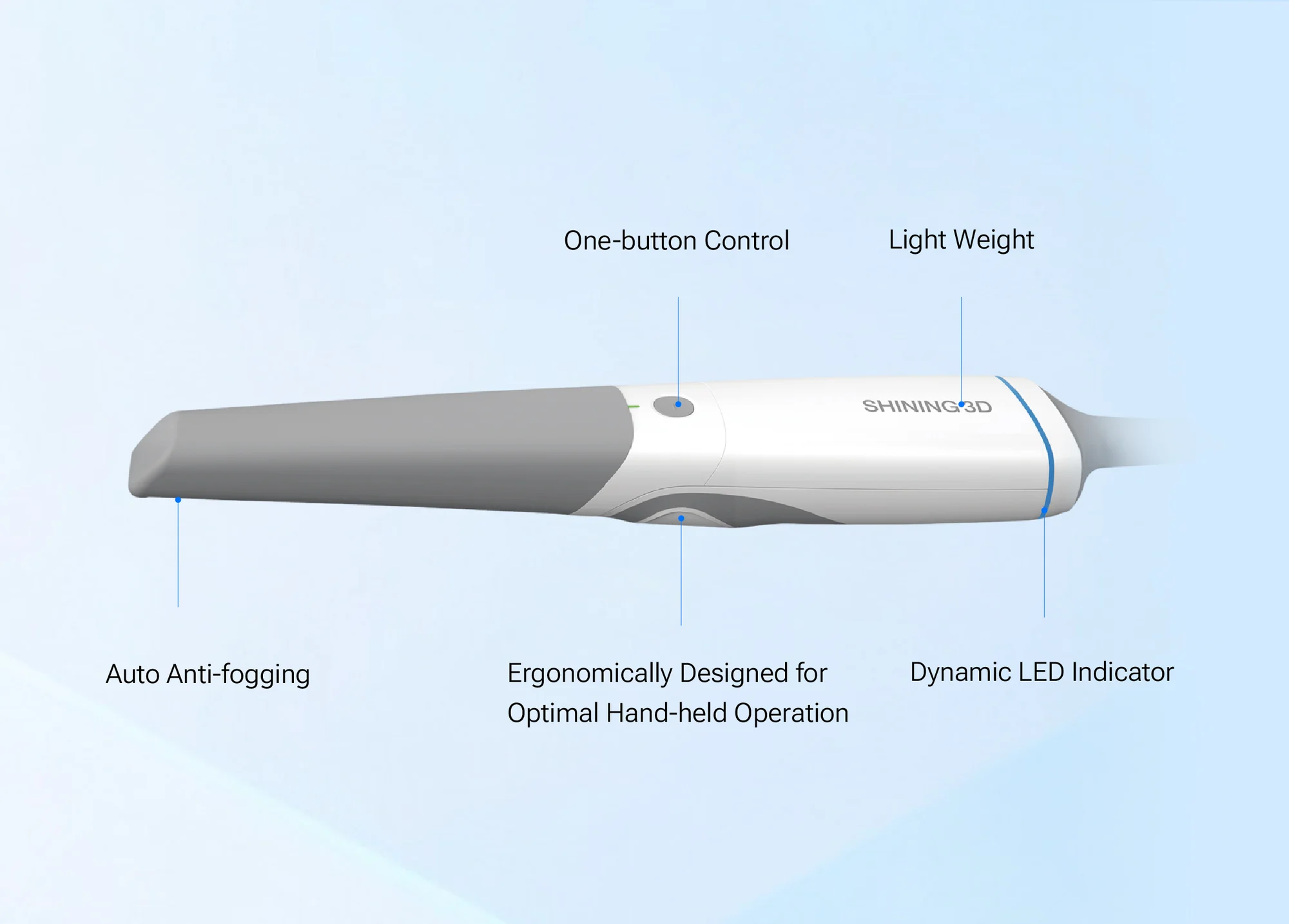
The Aoralscan 3 is one example of SHINING 3D Dental’s scanning solutions. According to official specifications, the scanner provides a standard scan field of 16 mm × 12 mm × 22 mm and a mini tip scan field of 12 mm × 9 mm × 22 mm. It weighs approximately 240 g without cables and supports STL, OBJ, and PLY data output.
These specifications allow dental professionals to capture digital impressions efficiently while maintaining compatibility with modern dental software systems. The lightweight design also supports easier handling during daily clinical use.
The Future of Digital Dental Scanning
The adoption of digital technology is continuing to reshape dental workflows. As software, scanning accuracy, and automation capabilities improve, digital tools are expected to support more efficient and predictable treatment processes.
A digital dental scanner provides dental professionals with valuable digital information that can improve diagnosis, communication, and treatment preparation. Meanwhile, an intraoral scanner offers a practical solution for replacing traditional impressions with faster and more flexible digital workflows.
For dental clinics seeking to improve efficiency and provide a modern patient experience, SHINING 3D DENTAL‘s Aoralscan solutions offer advanced scanning technology designed for today’s digital dentistry environment.